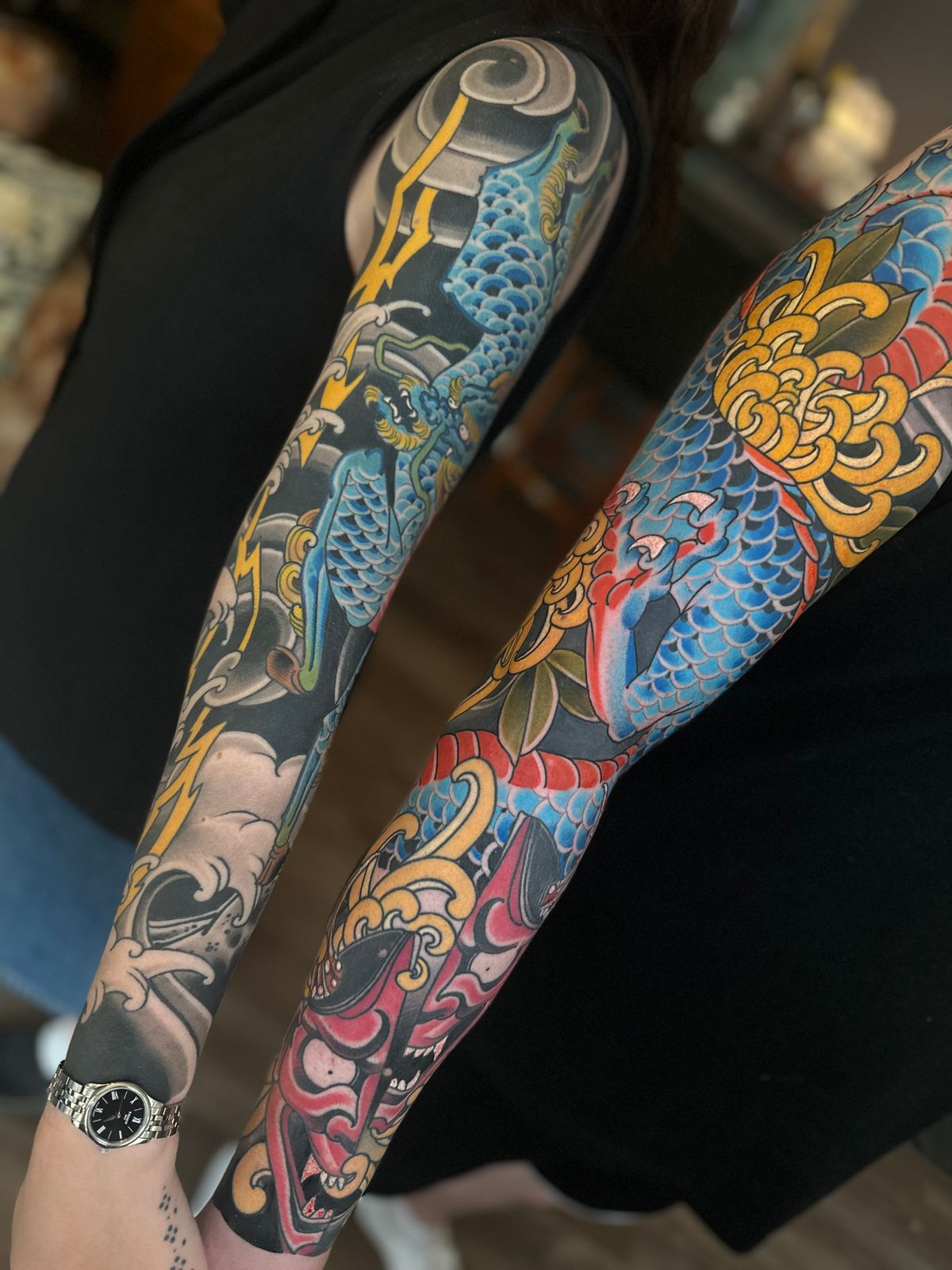
Japanese tattoo
Traditional motifs, strong graphics and a composition that follows the shape of the body. Private studio in Gdynia.
A Japanese tattoo is a bold composition, strong graphics and attention to every detail. What matters is not only the single elements, but above all how the whole piece looks together and how it sits on the body.
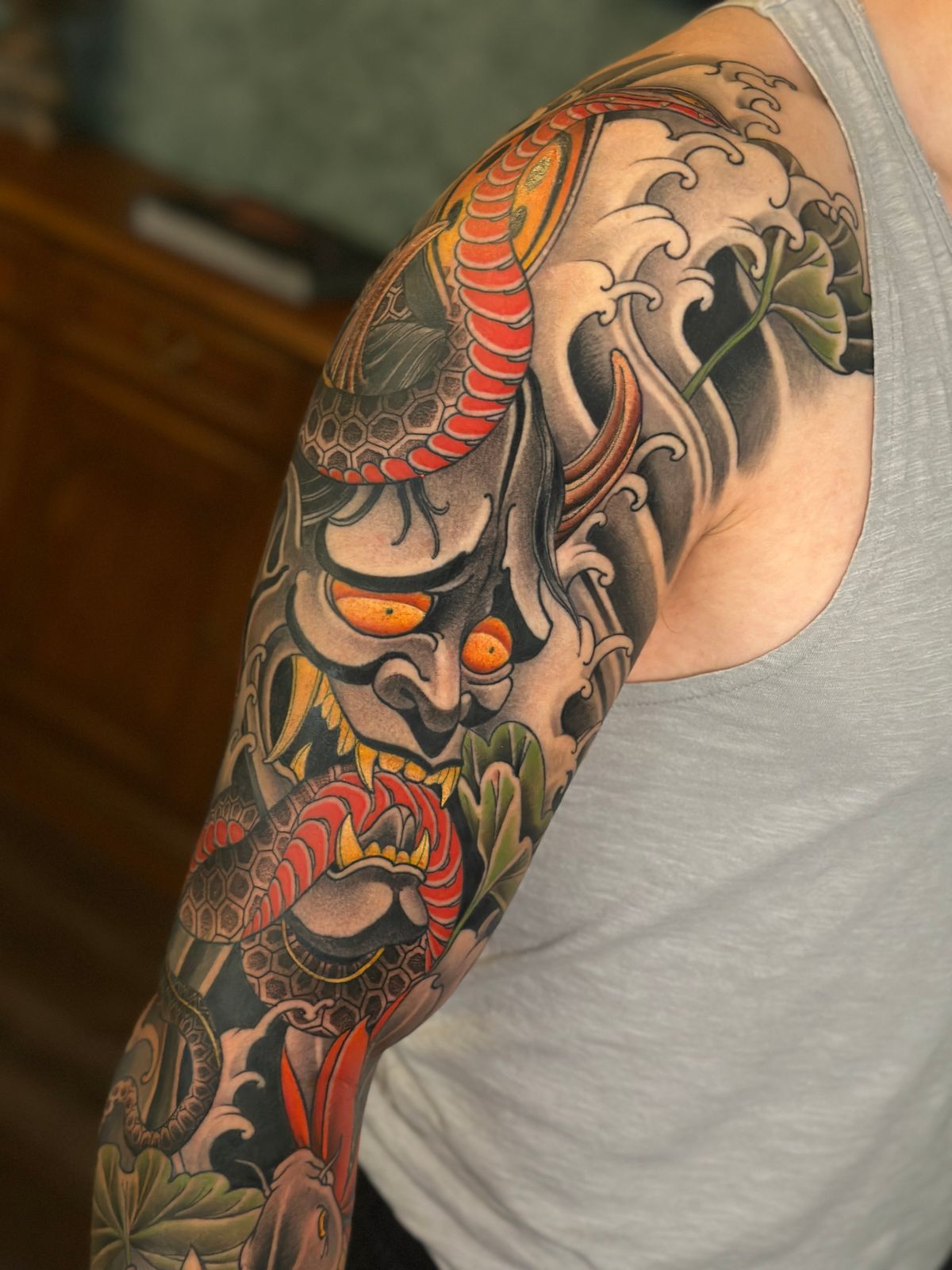
What a Japanese tattoo is
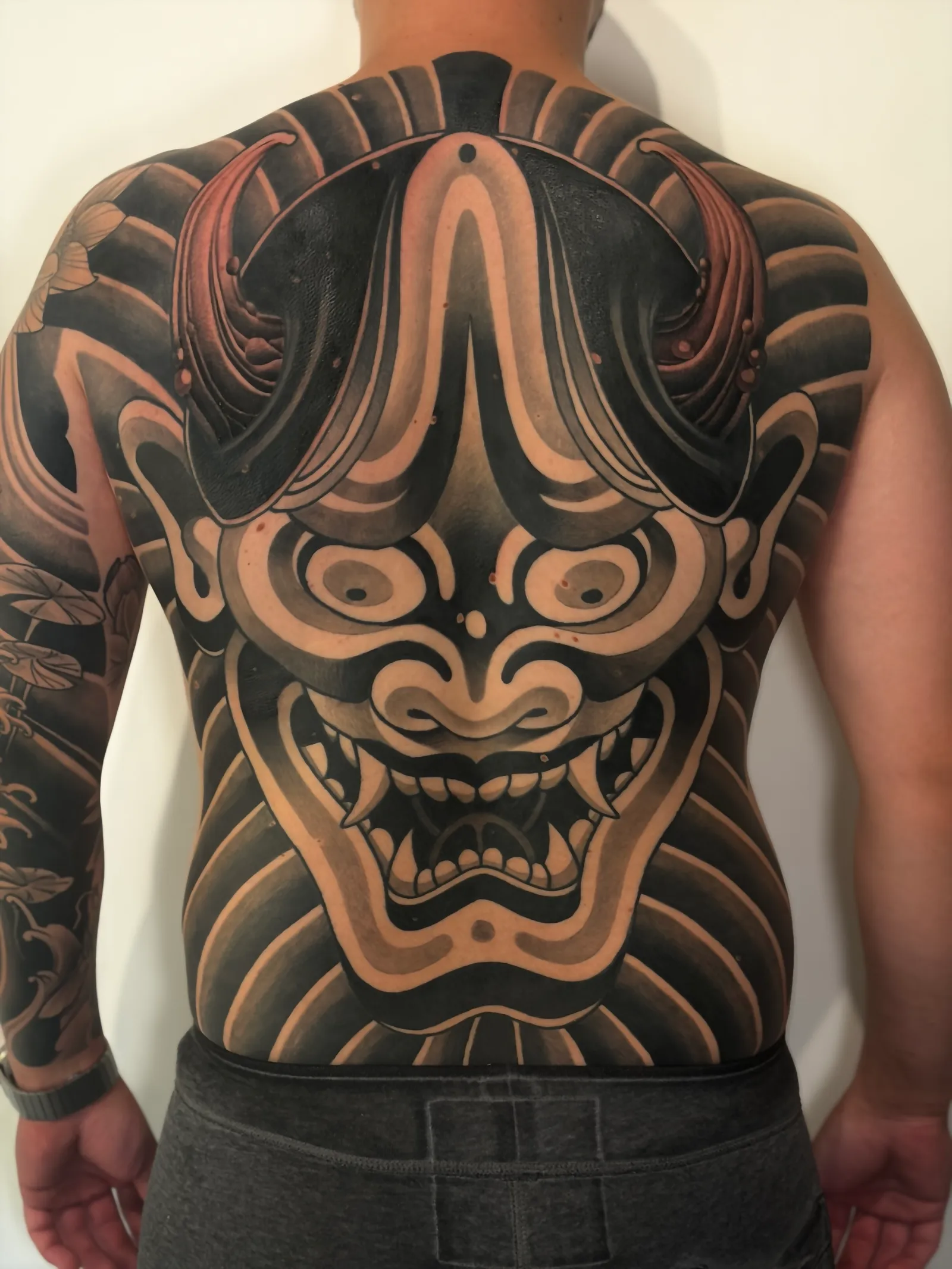
Japanese tattooing, also called irezumi, grew out of ukiyo-e woodblock prints and the legends of the Edo period. Its language is several things at once: a clear outline, flat areas of colour or black, a main motif and a background that ties everything into one whole.
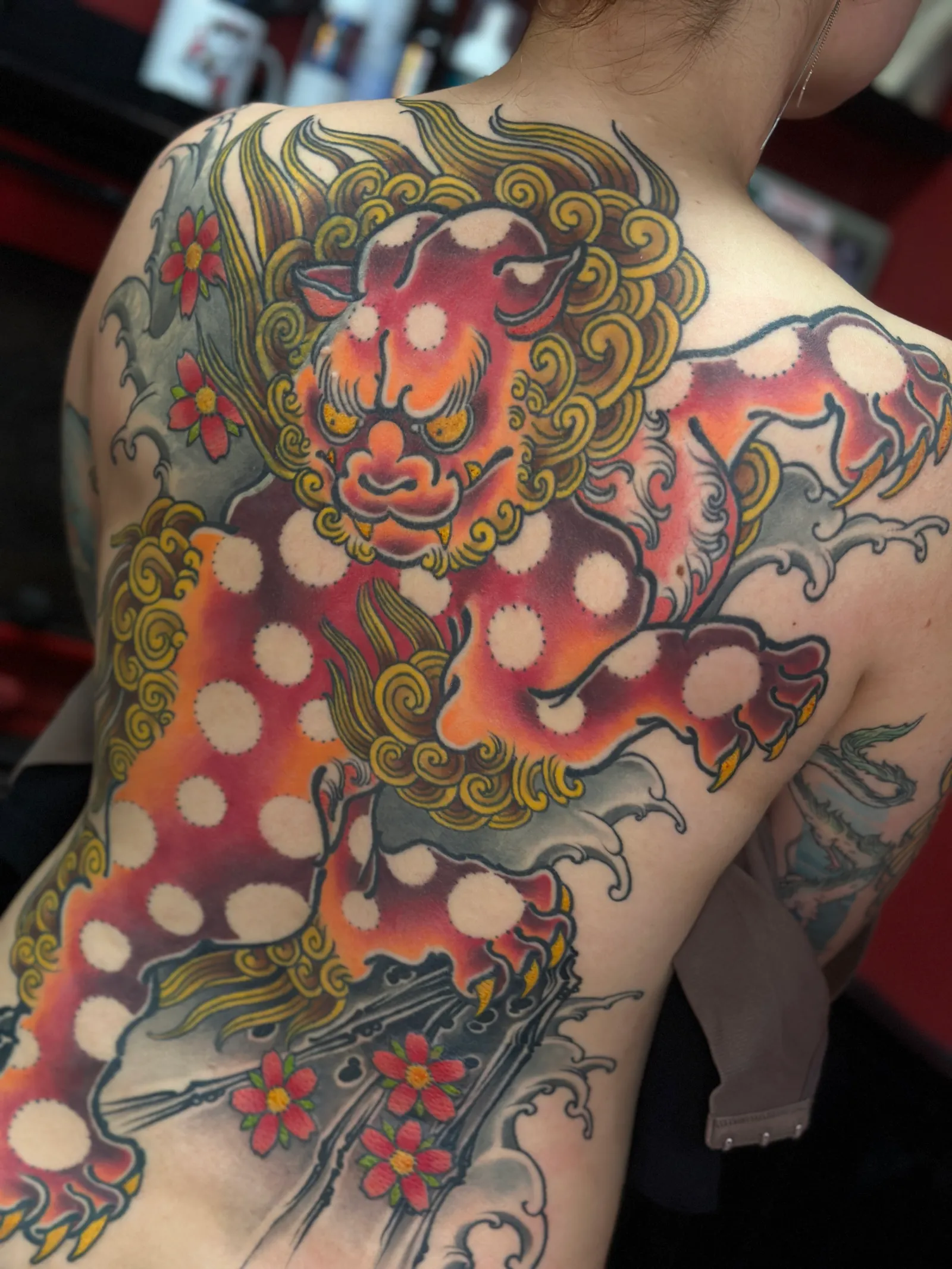
Unlike styles where a tattoo is a single image, here a whole area of the body is designed. A dragon, a koi or a mask does not float in empty space: waves, clouds, wind and flowers surround it, and the composition ends where a muscle or a joint ends.
I work in this tradition with modern tools and the pigments available in Europe today. I do classic large layouts as well as smaller pieces in the Japanese aesthetic.
Composition and background
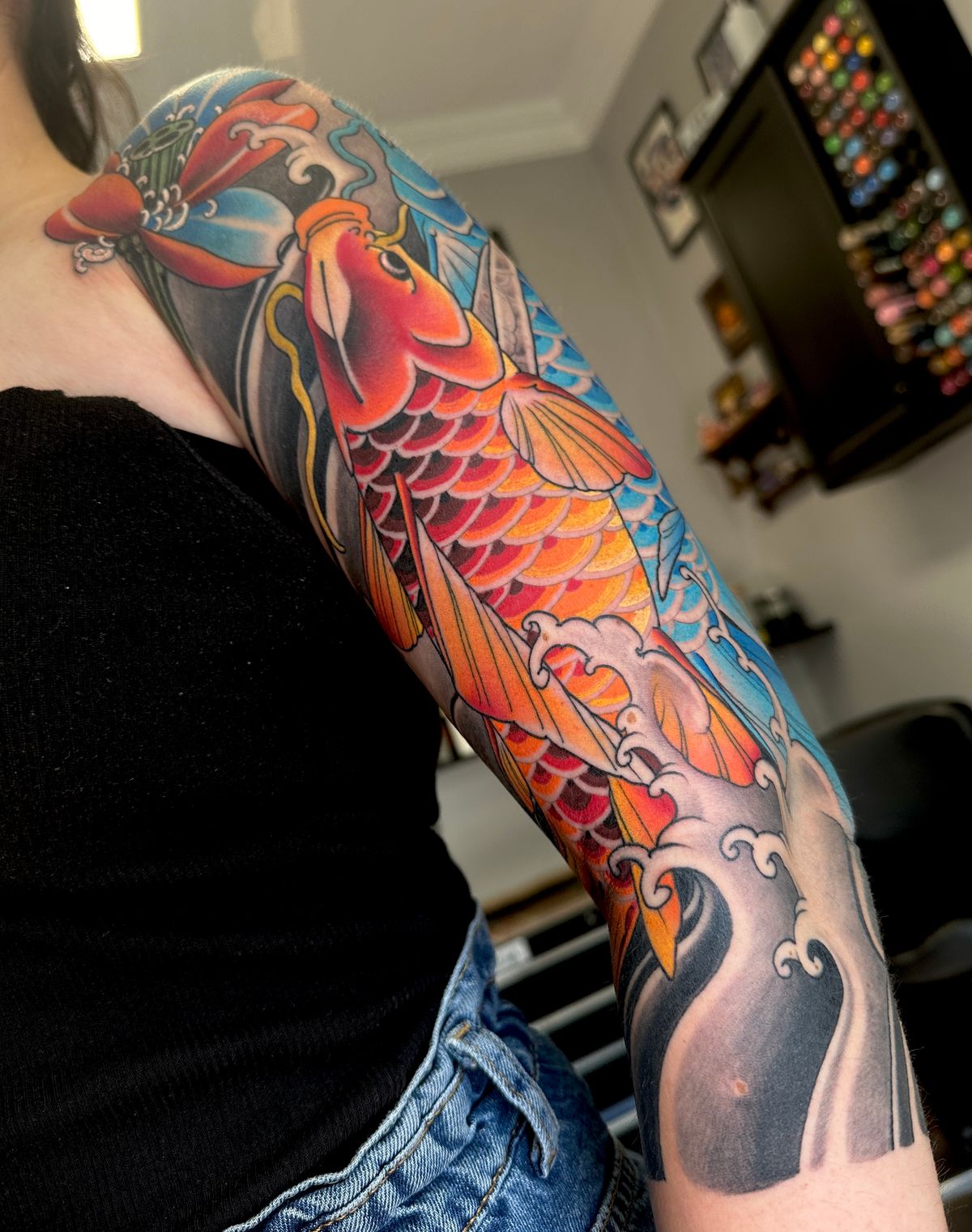
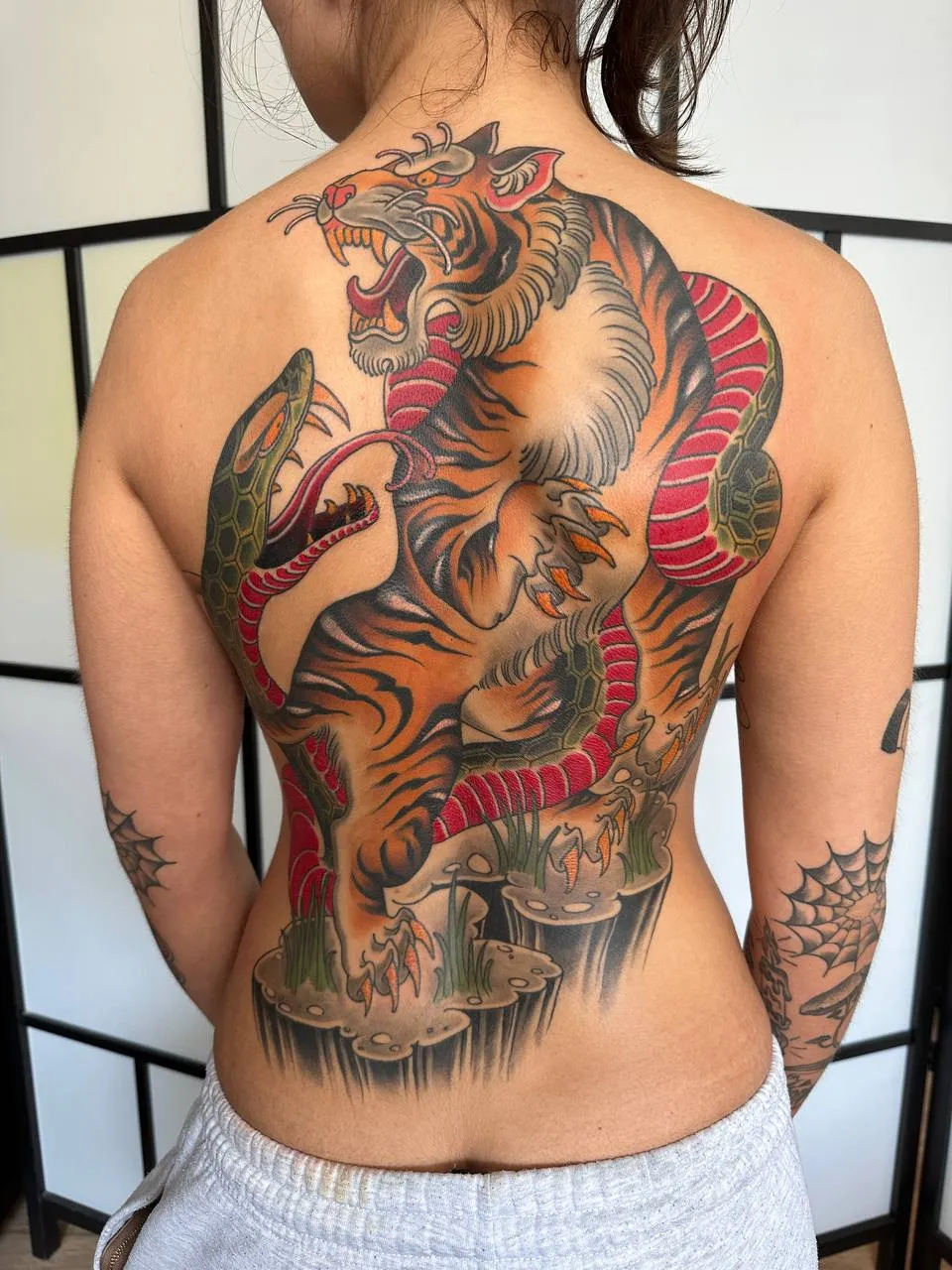
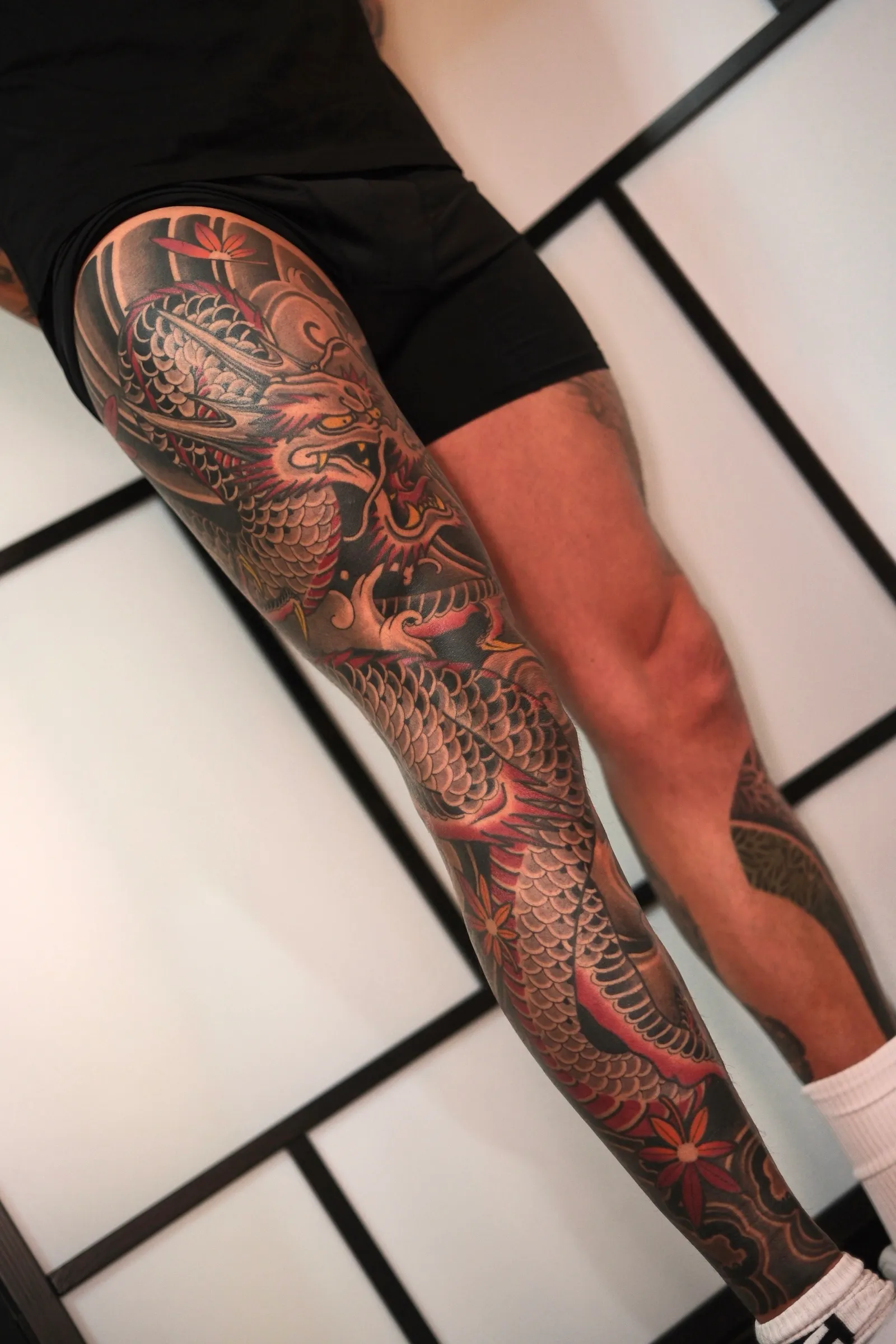
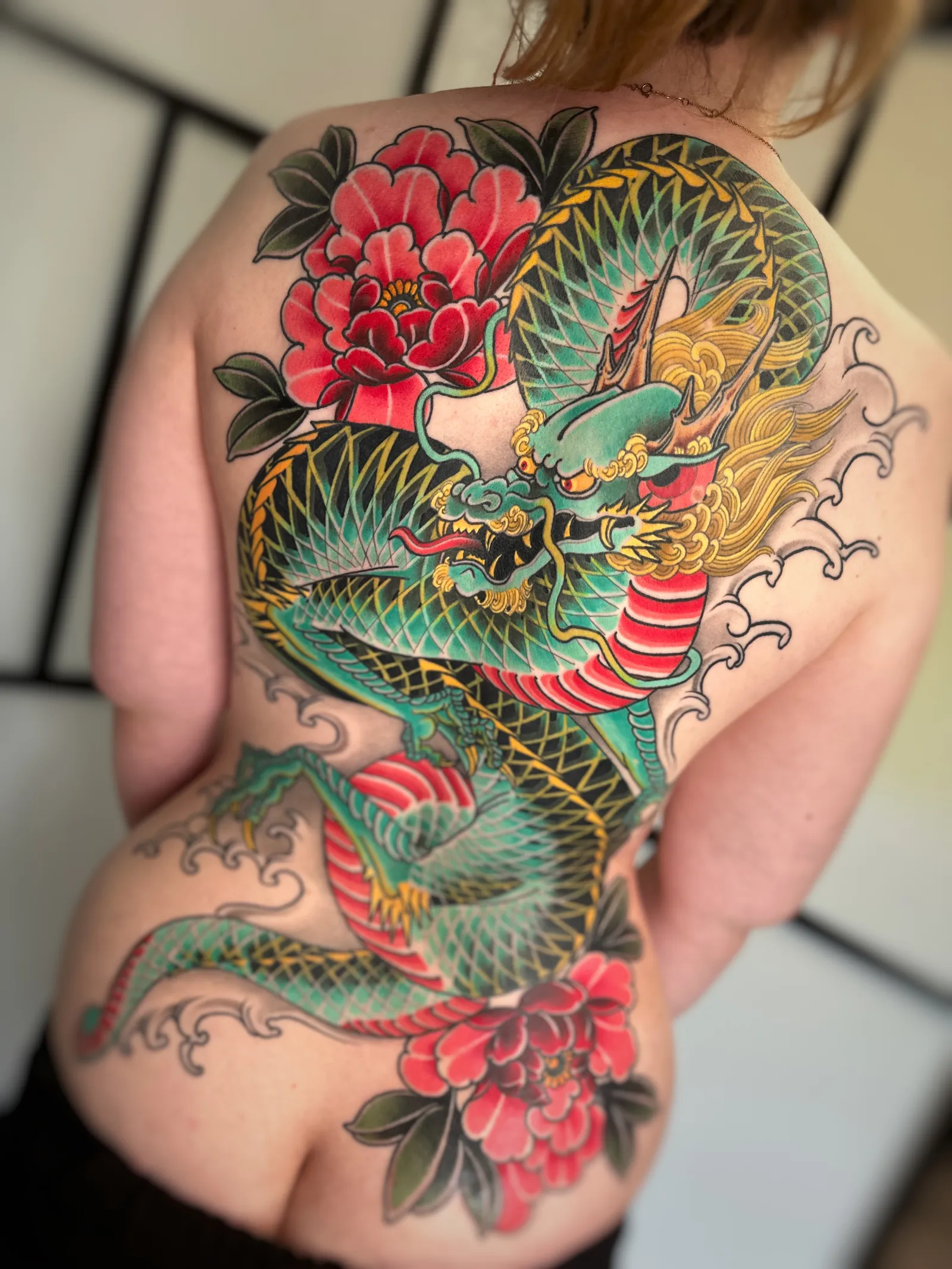
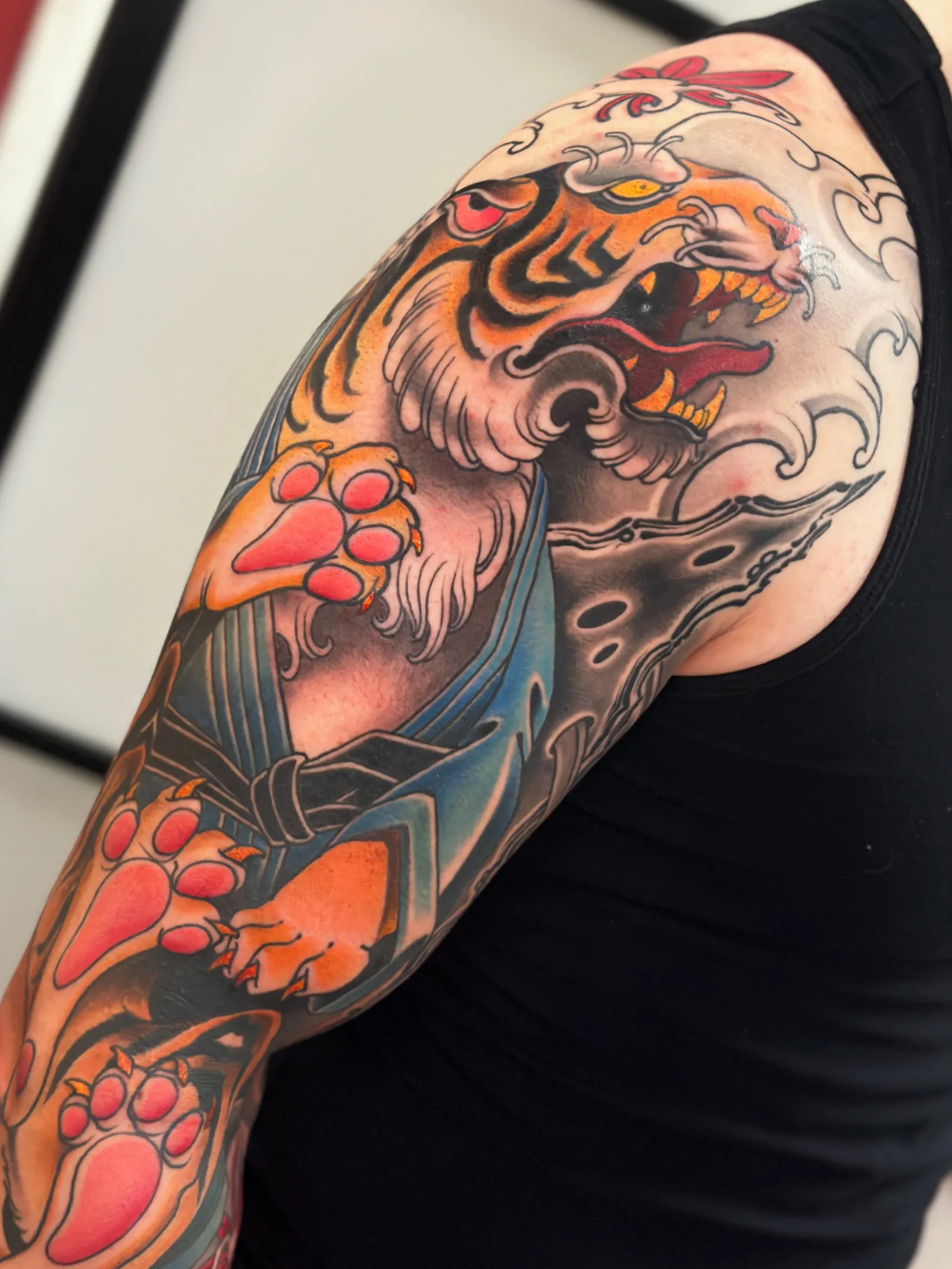
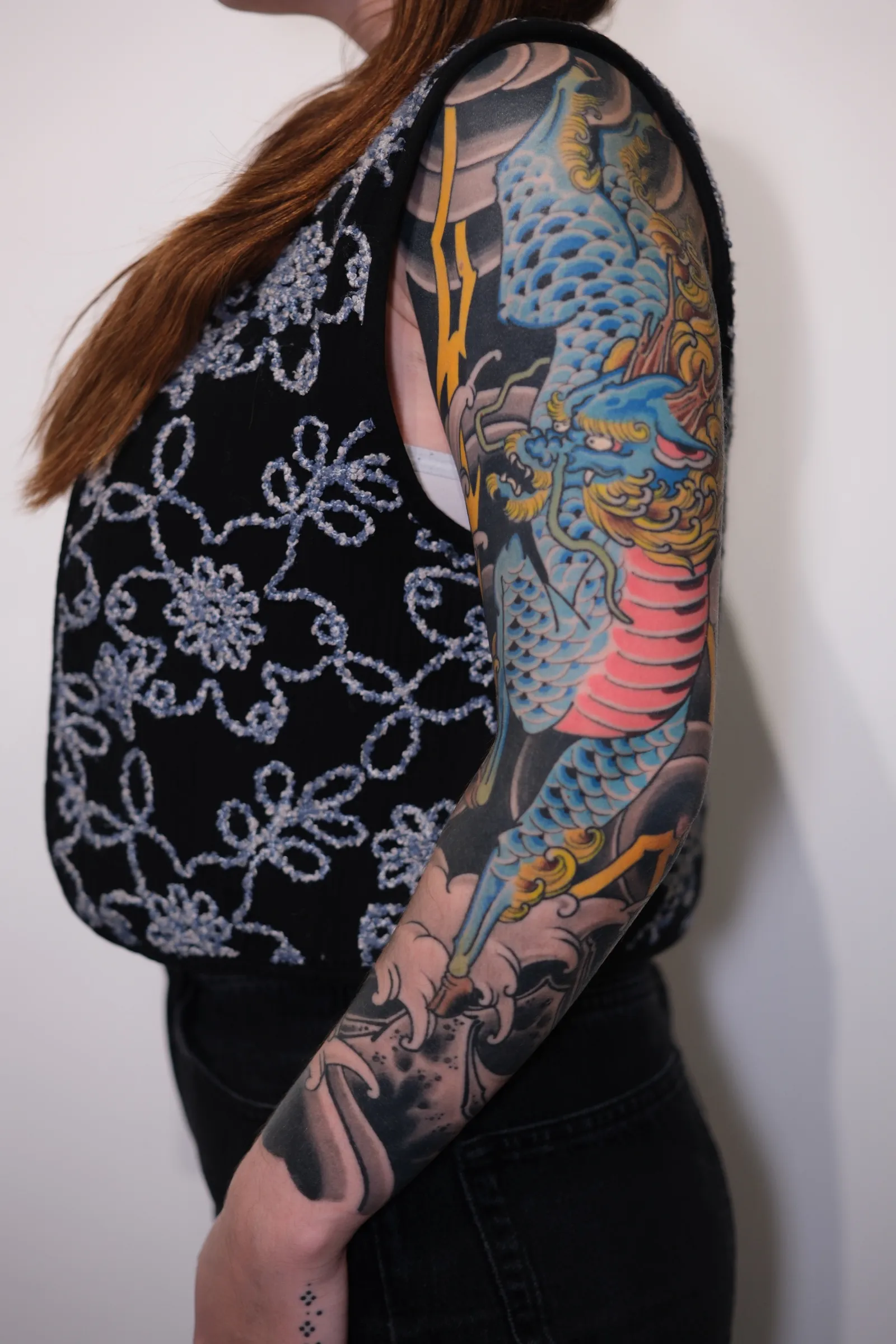
Composition is what gives a Japanese tattoo its strength. I place the main motif so that it works with the movement of the body: a dragon wraps around the upper arm, a koi swims up the forearm, a tiger comes down the shoulder blade.
The background is not filler. Waves, clouds and wind bars lead the eye, separate the motifs and make a sleeve or a back read as one piece rather than a set of separate tattoos. Thanks to the background, a large project can be built in stages and still stay coherent.
That is why planning starts with the whole: where the piece begins and ends, what its centre is and how it should look from a distance. The details come later.
Colour or black and grey
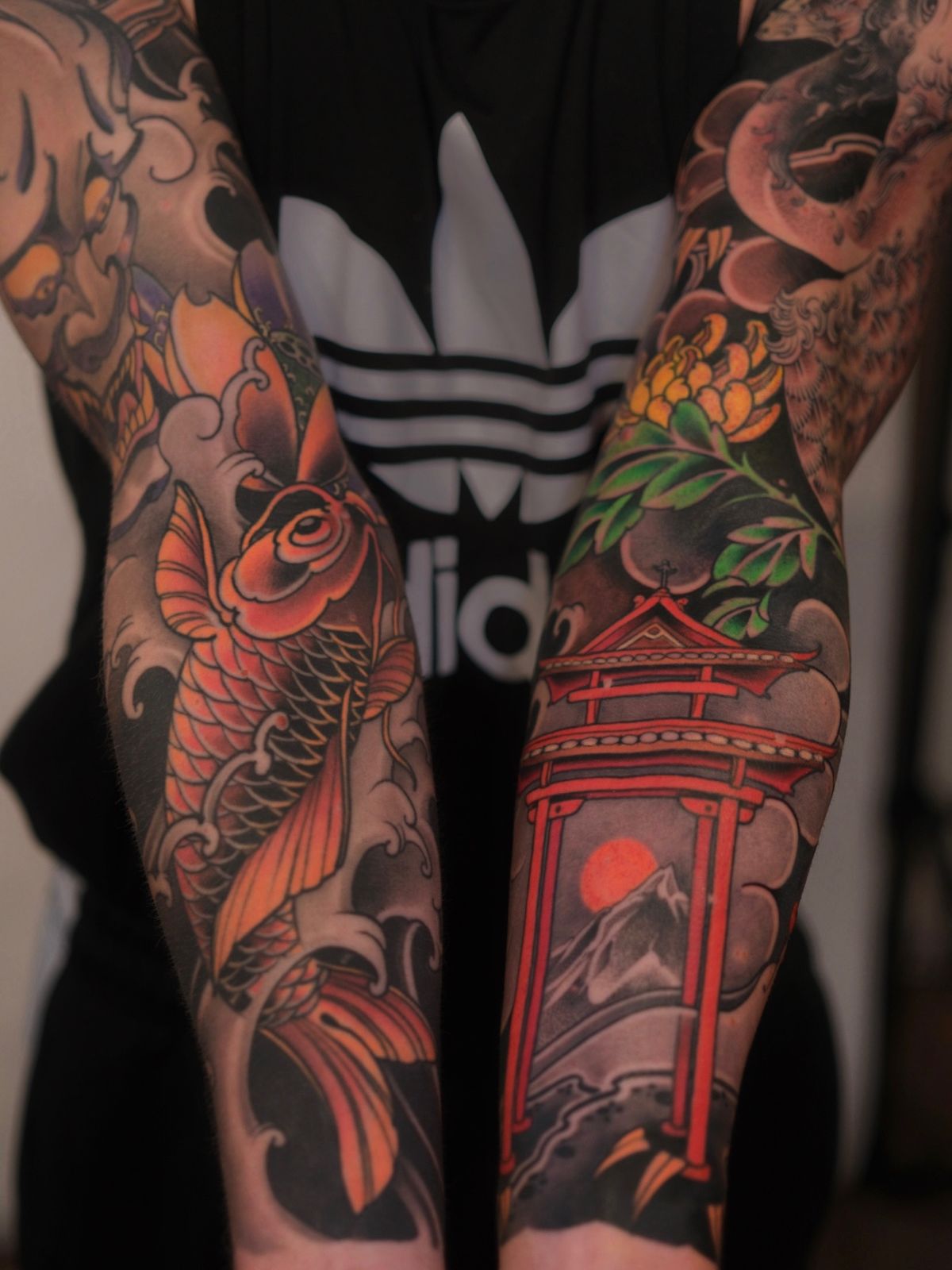
A Japanese tattoo works in both. Colour gives saturated reds, oranges, blues and greens against a black and grey background. A piece in black and grey alone is calmer and shows the drawing more strongly.
The choice depends on the motif, your skin tone, the placement and what you like. I often combine both: a black and grey background with one or two accents of colour, for example red cherry blossoms.
Motifs and their meaning
Each motif has its own story and associations that have recurred in Japanese art for centuries. The dragon stands for wisdom and strength used for good, the koi for perseverance, the hannya mask tells of emotions that transform a person, and the tiger protects against evil.
Motifs are also paired with seasons and flowers: peony, chrysanthemum, cherry blossom, lotus or maple leaves. The meanings are not rigid. What matters is that the design is coherent and suits you.
From a small piece to a full back
Japanese style looks best at a large scale, but you do not have to start with your back. A single motif on the forearm or calf can be a complete piece, and if you want to extend it later, the background lets you add further elements.
With sleeves, backs and legs we plan the whole from the start and divide the work into sessions.
Work
Full portfolio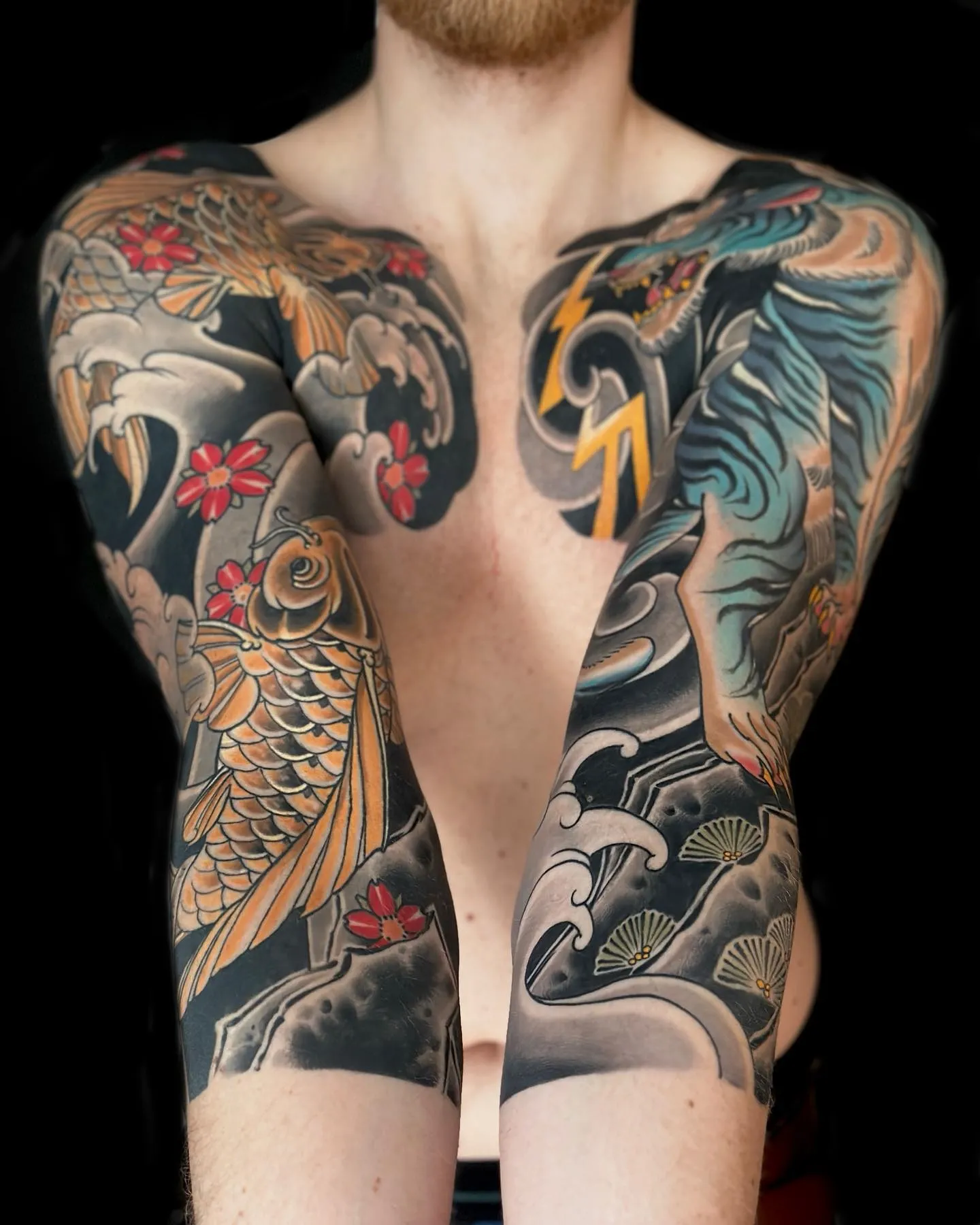
Formats
Other styles
FAQ
01How much does a tattoo cost?
The price depends on the size, the placement, the amount of detail and the number of sessions. Tell me what you want, give the size and placement and attach references, and I will prepare a quote for your project.
02What is the first step?
Message me on WhatsApp or Instagram: your idea, placement, approximate size and references. I will tell you whether it can be done, suggest a format and a rough price, and then we book a consultation or go straight to a session date.
03How far in advance should I book?
I usually book a few weeks ahead. For large projects we plan the following sessions straight away.
04How do I prepare for a session?
Get a good night’s sleep. Eat a proper meal before the session and drink plenty of water. Avoid alcohol and medication that affects blood clotting, provided stopping it is safe and agreed with your doctor. Wear comfortable clothes that give easy access to the area.
05Which styles do you tattoo?
Three: Japanese, neo-traditional and traditional. What they share is a bold outline and full colour, which is what makes a tattoo age well. Japanese is my main specialisation; neo-traditional and traditional I have tattooed alongside it for years.
Book a session
One message is enough to get started. Pick wherever you prefer to write - I answer myself, no bots.
Contact
- Visits
- By appointment only
- Hours
- Arranged around you
- Languages
- Polish, English